Yuyang Hu
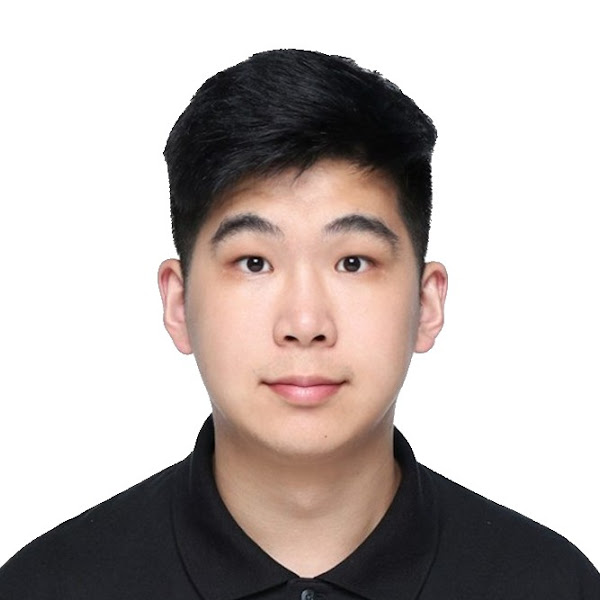
Yuyang Hu is a Research Scientist at Google. Before joining Google, he got his PhD from Washington University in St. Louis. His research is focused on developing next-generation image and video generative models.
Research Areas
Authored Publications
Sort By
Generative Manifold Distillation: Aligning Restoration Trajectories with Natural Image Prior
Mojtaba Ardakani
Arpit Bansal
Chenyang Chenyang
European Conference on Computer Vision, Springer (2026), pp. 669-687
Preview abstract
Pre-trained image restoration models often fail on out-of-distribution (OOD) real-world degradations. Adapting to these domains is challenging as real-world data lacks paired ground truth, and unsupervised methods often require unstable architectural changes. We propose Generative Manifold Distillation (GMD), which reframes domain adaptation as geometric manifold alignment. GMD operates in a strictly unpaired setting, requiring only low-quality (LQ) target observations. By leveraging the flow-matching dynamics of a frozen text-to-image foundation model, GMD projects off-manifold restorations onto the natural image manifold to generate high-quality pseudo-targets. To ensure stability, a quality-gated manifold filter rejects off-manifold samples, while source-anchored trajectory regularization prevents error accumulation. Ultimately, GMD distills a powerful generative prior into an efficient restoration network. Experiments demonstrate that GMD seamlessly adapts to new distributions using only LQ inputs, drastically improving perceptual quality with zero architectural modifications or added inference latency.
View details
Kernel Density Steering: Inference-Time Scaling via Mode Seeking for Image Restoration
Mojtaba Ardakani
Ulugbek S. Kamilov
39th Conference on Neural Information Processing Systems (2025)
Preview abstract
Diffusion models show promise for image restoration, but existing methods often struggle with inconsistent fidelity and undesirable artifacts. To address this, we introduce Kernel Density Steering (KDS), a novel inference-time framework promoting robust, high-fidelity outputs through explicit local mode-seeking. KDS employs an N-particle ensemble of diffusion samples, computing patch-wise kernel density estimation gradients from their collective outputs. These gradients steer patches in each particle towards shared, higher-density regions identified within the ensemble. This collective local mode-seeking mechanism, acting as ”collective wisdom”, steers samples away from spurious modes prone to artifacts, arising from independent sampling or model imperfections, and towards more robust, high fidelity structures. This allows us to obtain better quality samples at the expense of higher compute by simultaneously sampling multiple particles. As a plug-and-play framework, KDS requires no retraining or external verifiers, seamlessly integrating with various diffusion samplers. Extensive numerical validations demonstrate KDS substantially improves both quantitative and qualitative performance on challenging real-world super-resolution and image inpainting tasks.
View details