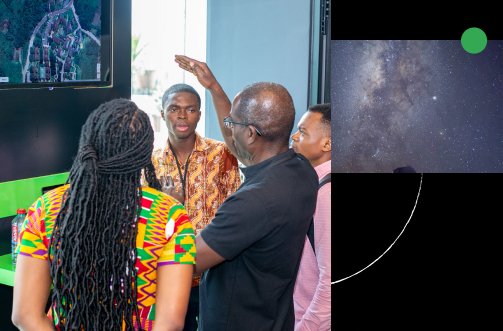
John Hernandez, PhD, MPP
Director, Head of Clinical Research Center of Excellence and Health Impact team
Research Areas
Authored Publications
Sort By
SymptomAI: Toward a Conversational AI Agent for Everyday Symptom Assessment
Joe Breda
Fadi Yousif
Beszel Hawkins
Marinela Cotoi
Miao Liu
Ray Luo
Sam Schmidgall
Girish Narayanswamy
Samuel Solomon
Max Xu
Longfei Shangguan
Bhavna Daryani
Buddy Herkenham
Cara Tan
Mark Malhotra
Shwetak Patel
Zach Wasson
Dimitrios Antos
Bob Lou
Matthew Thompson
Jonathan Richina
Anupam Pathak
Nichole Young-Lin
Jake Sunshine
Daniel McDuff
Arxiv preprint, 2605.040 (2026) (to appear)
Preview abstract
Language models excel at diagnostic assessments on curated medical case-studies and vignettes, performing on par with, or better than, clinical professionals. However, existing studies focus on complex scenarios with rich context making it difficult to draw conclusions about how these systems perform for patients reporting symptoms in everyday life. We deployed SymptomAI, a set of conversational AI agents for end-to-end patient interviewing and differential diagnosis (DDx), via the Fitbit app in a study that randomized participants (N=13,917) to interact with five AI agents. This corpus captures diverse communication and a realistic distribution of illnesses from a real world population. A subset of 1,228 participants reported a clinician-provided diagnosis, and 517 of these were further evaluated by a panel of clinicians during over 250 hours of annotation. SymptomAI DDx were significantly more accurate (OR = 2.56, p < 0.001) than those from independent clinicians given the same dialogue in a blinded randomized comparison. Moreover, agentic strategies which conduct a dedicated symptom interview that elicit additional symptom information before providing a diagnosis, perform substantially better than baseline, user-guided conversations (p < 0.001). An auxiliary analysis on 1,509 conversations from a general US population panel validated that these results generalize beyond wearable device users. We used SymptomAI diagnoses as labels for all 13,917 participants to analyze over 500,000 days of wearable metrics across nearly 400 unique conditions. We identified strong associations between acute infections and physiological shifts (e.g., OR > 7 for influenza). While limited by self-reported ground truth, these results demonstrate the benefits of a dedicated and complete symptom interview compared to a user-guided symptom discussion, which is the default of most consumer LLMs.
View details
A personal health large language model for sleep and fitness coaching
Anastasiya Belyaeva
Zhun Yang
Nick Furlotte
Chace Lee
Erik Schenck
Yojan Patel
Jian Cui
Robby Bryant
Ryan Gomes
Allen Jiang
Roy Lee
Javier Perez
Jamie Rogers
Cathy Speed
Shyam Tailor
Megan Walker
Jeffrey Yu
Tim Althoff
Conor Heneghan
Mark Malhotra
Leor Stern
Shwetak Patel
Shravya Shetty
Jiening Zhan
Daniel McDuff
Nature Medicine (2025)
Preview abstract
Although large language models (LLMs) show promise for clinical healthcare applications, their utility for personalized health monitoring using wearable device data remains underexplored. Here we introduce the Personal Health Large Language Model (PH-LLM), designed for applications in sleep and fitness. PH-LLM is a version of the Gemini LLM that was finetuned for text understanding and reasoning when applied to aggregated daily-resolution numerical sensor data. We created three benchmark datasets to assess multiple complementary aspects of sleep and fitness: expert domain knowledge, generation of personalized insights and recommendations and prediction of self-reported sleep quality from longitudinal data. PH-LLM achieved scores that exceeded a sample of human experts on multiple-choice examinations in sleep medicine (79% versus 76%) and fitness (88% versus 71%). In a comprehensive evaluation involving 857 real-world case studies, PH-LLM performed similarly to human experts for fitness-related tasks and improved over the base Gemini model in providing personalized sleep insights. Finally, PH-LLM effectively predicted self-reported sleep quality using a multimodal encoding of wearable sensor data, further demonstrating its ability to effectively contextualize wearable modalities. This work highlights the potential of LLMs to revolutionize personal health monitoring via tailored insights and predictions from wearable data and provides datasets, rubrics and benchmark performance to further accelerate personal health-related LLM research.
View details
Smartphone use in a large US adult population: Temporal associations between objective measures of usage and mental well-being
Ari Winbush
Benjamin Nelson
Nicholas Allen
Andrew Barakat
Daniel McDuff
Conor Heneghan
Allen Jiang
PNAS (2025)
Preview abstract
Smartphones are a vital tool for most people. They facilitate many everyday tasks and as a result they have become ubiquitous and indispensable. There are concerns about how the use of these devices may impact mental health and wellbeing. Yet, there are few studies that have reported objective data about phone usage from large and diverse cohorts and studies have found low correlations between subjective and objective smartphone use. In order to better elucidate these complex interactions, it is important to understand and characterize what resembles “normative” smartphone use behavior. In this paper, we present normative patterns of objectively measured phone usage from a large prospective observational study. We analyze a quarter of a million days of phone usage data from 10,099 adult subjects that provides objective longitudinal data over a four week period in the US general population. Contrary to popular belief, our model shows little support for the conclusion that smartphone use predicts mood the following week or that mood predicts smartphone use the following week, with some results differing depending on whether the effects are within-person or between-person. Lastly, while some findings are statistically significant, the effect sizes of these results are minimal, suggesting little to no impact in real-world settings and therefore a lack of clinical significance.
View details
The Anatomy of a Personal Health Agent
Ahmed Metwally
Ken Gu
Jiening Zhan
Kumar Ayush
Hong Yu
Akshay Paruchuri
Amy Lee
Qian He
Zhihan Zhang
Isaac Galatzer-Levy
Xavi Prieto
Andrew Barakat
Ben Graef
Yuzhe Yang
Daniel McDuff
Brent Winslow
Shwetak Patel
Girish Narayanswamy
Conor Heneghan
Max Xu
Jacqueline Shreibati
Mark Malhotra
Orson Xu
Tim Althoff
Tony Faranesh
Nova Hammerquist
Vidya Srinivas
arXiv (2025)
Preview abstract
Health is a fundamental pillar of human wellness, and the rapid advancements in large language models (LLMs) have driven the development of a new generation of health agents. However, the solution to fulfill diverse needs from individuals in daily non-clinical settings is underexplored. In this work, we aim to build a comprehensive personal health assistant that is able to reason about multimodal data from everyday consumer devices and personal health records. To understand end users’ needs when interacting with such an assistant, we conducted an in-depth analysis of query data from users, alongside qualitative insights from users and experts gathered through a user-centered design process. Based on these findings, we identified three major categories of consumer health needs, each of which is supported by a specialist subagent: (1) a data science agent that analyzes both personal and population-level time-series wearable and health record data to provide numerical health insights, (2) a health domain expert agent that integrates users’ health and contextual data to generate accurate, personalized insights based on medical and contextual user knowledge, and (3) a health coach agent that synthesizes data insights, drives multi-turn user interactions and interactive goal setting, guiding users using a specified psychological strategy and tracking users’ progress. Furthermore, we propose and develop a multi-agent framework, Personal Health Insight Agent Team (PHIAT), that enables dynamic, personalized interactions to address individual health needs. To evaluate these individual agents and the multi-agent system, we develop a set of N benchmark tasks and conduct both automated and human evaluations, involving 100’s of hours of evaluation from health experts, and 100’s of hours of evaluation from end-users. Our work establishes a strong foundation towards the vision of a personal health assistant accessible to everyone in the future and represents the most comprehensive evaluation of a consumer AI health agent to date.
View details
Capturing Real-World Habitual Sleep Patterns with a Novel User-centric Algorithm to Pre-Process Fitbit Data in the All of Us Research Program: Retrospective observational longitudinal study
Hiral Master
Jeffrey Annis
Karla Gleichauf
Lide Han
Peyton Coleman
Kelsie Full
Neil Zheng
Doug Ruderfer
Evan Brittain
Journal of Medical Internet Research (2025)
Preview abstract
Background:
Commercial wearables such as Fitbit quantify sleep metrics using fixed calendar times as default measurement periods, which may not adequately account for individual variations in sleep patterns. To address this limitation, experts in sleep medicine and wearable technology developed a user-centric algorithm designed to more accurately reflect actual sleep behaviors and improve the validity of wearable-derived sleep metrics.
Objective:
This study aims to describe the development of a new user-centric algorithm, compare its performance with the default calendar-relative algorithm, and provide a practical guide for analyzing All of Us Fitbit sleep data on a cloud-based platform.
Methods:
The default and user-centric algorithms were implemented to preprocess and compute sleep metrics related to schedule, duration, and disturbances using high-resolution Fitbit sleep data from 8563 participants (median age 58.1 years, 6002/8341, 71.96%, female) in the All of Us Research Program (version 7 Controlled Tier). Variations in typical sleep patterns were calculated by examining the differences in the mean number of primary sleep logs classified by each algorithm. Linear mixed-effects models were used to compare differences in sleep metrics across quartiles of variation in typical sleep patterns.
Results:
Out of 8,452,630 total sleep logs collected over a median of 4.2 years of Fitbit monitoring, 401,777 (4.75%) nonprimary sleep logs identified by the default algorithm were reclassified as primary sleep by the user-centric algorithm. Variation in typical sleep patterns ranged from –0.08 to 1. Among participants with the greatest variation in typical sleep patterns, the user-centric algorithm identified significantly more total sleep time (by 17.6 minutes; P<.001), more wake after sleep onset (by 13.9 minutes; P<.001), and lower sleep efficiency (by 2.0%; P<.001), on average. Differences in sleep stage metrics between the 2 algorithms were modest.
Conclusions:
The user-centric algorithm captures the natural variability in sleep schedules, providing an alternative approach to preprocess and evaluate sleep metrics related to schedule, duration, and disturbances. A publicly available R package facilitates the implementation of this algorithm for clinical and translational research.
View details
Towards a Personal Health Large Language Model
Anastasiya Belyaeva
Nick Furlotte
Zhun Yang
Chace Lee
Erik Schenck
Yojan Patel
Jian Cui
Robby Bryant
Ryan Gomes
Allen Jiang
Roy Lee
Javier Perez
Jamie Rogers
Cathy Speed
Shyam Tailor
Megan Walker
Jeffrey Yu
Tim Althoff
Conor Heneghan
Mark Malhotra
Leor Stern
Shwetak Patel
Shravya Shetty
Jiening Zhan
Yeswanth Subramanian
Daniel McDuff
arXiv (2024)
Preview abstract
Large language models (LLMs) can retrieve, reason over, and make inferences about a wide range of information. In health, most LLM efforts to date have focused on clinical tasks. However, mobile and wearable devices, which are rarely integrated into clinical tasks, provide a rich, continuous, and longitudinal source of data relevant for personal health monitoring. Here we present a new model, Personal Health Large Language Model (PH-LLM), a version of Gemini fine-tuned for text understanding and reasoning over numerical time-series personal health data for applications in sleep and fitness. To systematically evaluate PH-LLM, we created and curated three novel benchmark datasets that test 1) production of personalized insights and recommendations from measured sleep patterns, physical activity, and physiological responses, 2) expert domain knowledge, and 3) prediction of self-reported sleep quality outcomes. For the insights and recommendations tasks we created 857 case studies in sleep and fitness. These case studies, designed in collaboration with domain experts, represent real-world scenarios and highlight the model’s capabilities in understanding and coaching. Through comprehensive human and automatic evaluation of domain-specific rubrics, we observed that both Gemini Ultra 1.0 and PH-LLM are not statistically different from expert performance in fitness and, while experts remain superior for sleep, fine-tuning PH-LLM provided significant improvements in using relevant domain knowledge and personalizing information for sleep insights. To further assess expert domain knowledge, we evaluated PH-LLM performance on multiple choice question examinations in sleep medicine and fitness. PH-LLM achieved 79% on sleep (N=629 questions) and 88% on fitness (N=99 questions), both of which exceed average scores from a sample of human experts as well as benchmarks for receiving continuing credit in those domains. To enable PH-LLM to predict self-reported assessments of sleep quality, we trained the model to predict self-reported sleep disruption and sleep impairment outcomes from textual and multimodal encoding representations of wearable sensor data. We demonstrate that multimodal encoding is both necessary and sufficient to match performance of a suite of discriminative models to predict these outcomes. Although further development and evaluation are necessary in the safety-critical personal health domain, these results demonstrate both the broad knowledge base and capabilities of Gemini models and the benefit of contextualizing physiological data for personal health applications as done with PH-LLM.
View details
Preview abstract
Background: Physical activity levels worldwide have declined over recent decades, with the average number of daily steps decreasing steadily since 1995. Given that physical inactivity is a major modifiable risk factor for chronic disease and mortality, increasing the level of physical activity is a clear opportunity to improve population health on a broad scale. The current study aims to assess the cost-effectiveness and budget impact of a Fitbit-based intervention among healthy, but insufficiently active, adults to quantify the potential clinical and economic value for a commercially insured population in the U.S. Methods: An economic model was developed to compare physical activity, health outcomes, costs, and quality-adjusted life-years (QALYs) associated with usual care and a Fitbit-based intervention that consists of a consumer wearable device alongside goal setting and feedback features provided in a companion software application. Improvement in physical activity was measured in terms of mean daily step count. The effects of increased daily step count were characterized as reduced short-term healthcare costs and decreased incidence of chronic diseases with corresponding improvement in health utility and reduced disease costs. Published literature, standardized costing resources, and data from a National Institutes of Health-funded research program were utilized. Cost-effectiveness and budget impact analyses were performed for a hypothetical cohort of middle-aged adults. Results: The base case cost-effectiveness results found the Fitbit intervention to be dominant (less costly and more effective) compared to usual care. Discounted 15-year incremental costs and QALYs were -$1,257 and 0.011, respectively. In probabilistic analyses, the Fitbit intervention was dominant in 93% of simulations and either dominant or cost-effective (defined as less than $150,000/QALY gained) in 99.4% of simulations. For budget impact analyses conducted from the perspective of a U.S. Commercial payer, the Fitbit intervention was estimated to save approximately $6.5-million dollars over 2 years and $8.5-million dollars over 5 years for a cohort of 8,000 participants. Although the economic analysis results were very robust, the short-term healthcare cost savings were the most uncertain in this population and warrant further research. Conclusions: There is abundant evidence documenting the benefits of wearable activity trackers when used to increase physical activity as measured by daily step counts. Our research provides additional health economic evidence supporting implementation of wearable-based interventions to improve population health and offers compelling support for payers to consider including wearable-based physical activity interventions as part of a comprehensive portfolio of preventive health offerings for their insured populations.
View details
Research Protocol for the Google Health Digital Wellbeing Study
Ari Winbush
Nicholas Allen
Andrew Barakat
Felicia Cordeiro
Daniel McDuff
Allen Jiang
Ryann Crowley
JMIR Research Protocols (2024)
Preview abstract
The impact of digital device use on health and wellbeing is a pressing question to which individuals, families, schools, policy makers, legislators, and digital designers are all demanding answers. However, the scientific literature on this topic to date is marred by small and/or unrepresentative samples, poor measurement of core constructs (e.g., device use, smartphone addiction), and a limited ability to address the psychological and behavioral mechanisms that may underlie the relationships between device use and wellbeing. A number of recent authoritative reviews have made urgent calls for future research projects to address these limitations. The critical role of research is to identify which patterns of use are associated with benefits versus risks, and who is more vulnerable to harmful versus beneficial outcomes, so that we can pursue evidence-based product design, education, and regulation aimed at maximizing benefits and minimizing risks of smartphones and other digital devices. We describe a protocol for a Digital Wellbeing Study (DWB) to help answer these questions.
View details
Preview abstract
This Op-ed is by leaders from the American Heart Association, Digital Medicine Society and Google involved in a Digital Medicine Society-sponsored project on digital measures for physical activity. The Op-ed summarizes evidence that the technology exists today to digitally measure physical activity in the broad population – and, by measuring it the right way, we can embrace it as the ‘6th vital sign’ and enter a new era of healthcare centered on proactive patient care.
View details
Evaluating PEARL - a Personalized Exercise Assistant using Reinforcement Learning (Walkmate Study)
Hulya Emir-Farinas
Martin Seneviratne
Amy Lee
Jim Taylor
Sriram Lakshminarasimhan
Emily Rosenzweig
OSF Registries (2024)
Preview abstract
Study protocol for PEARL Study: To evaluate the impact of two personalized nudging strategies delivered as pop-up notifications via the Fitbit app on user step count. Specifically, to personalize the following parameters of the pop-up notification system: message content, and timing (hr of the day)
View details