Michael P Brenner
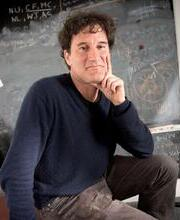
Michael is an applied mathematician, interested in the interface between machine learning and science.
Research Areas
Authored Publications
Sort By
XMob: Accelerated Differentiable Mesoscopic Traffic Simulation in JAX
Sam Griesemer
John Burge
Shantanu Shahane
Yechen Li
Naples, Italy (2026)
Preview abstract
This paper introduces XMob, a novel differentiable traffic simulation framework built in JAX to advance traditional models like SUMO’s mesoscopic simulator. By leveraging JAX’s capabilities for vectorized, hardware-accelerated computation (GPU/TPU), XMob achieves orders-of-magnitude speedups, enabling large-scale urban network simulations and extensive counterfactual analyses. A key innovation is XMob’s inherent differentiability, facilitating direct integration with gradient-based optimization for tasks such as demand calibration and network parameter estimation, significantly outperforming black-box approaches. Furthermore, XMob can be used in Physics-Informed Machine Learning (PIML) pipelines to enhance data-driven augmentation, embedding domain principles like flow conservation and shockwave theory. This ensures physically plausible and robust predictions, even for unobserved scenarios such as lane modifications. The hybrid architecture, combining a deterministic JAX core with incremental machine learning, offers a scalable and efficient solution for modern traffic simulation and optimization challenges.
View details
Prospective multi-pathogen disease forecasting using autonomous LLM-guided tree search
Sarah Martinson
Nicholas Reich
Zahra Shamsi
arXiv (2026)
Preview abstract
Probabilistic forecasting of infectious diseases is crucial for public health but relies on labor-intensive manual curation by expert modeling teams. This bespoke development bottlenecks scalability to granular geographic resolutions or emerging pathogens. Here, we present an autonomous system utilizing Large Language Model (LLM)-guided tree search \cite{aygun_ai_2025} to iteratively generate, evaluate, and optimize executable forecasting software. In a fully prospective, real-time evaluation during the 2025–2026 US respiratory season, the system autonomously discovered methodologically diverse models for influenza, COVID-19, and respiratory syncytial virus (RSV). Aggregating these machine-generated models yielded an ensemble that consistently matched or outperformed the gold-standard, human-curated Centers for Disease Control and Prevention (CDC) hub ensembles out-of-sample. The system successfully navigated data-scarce "cold start" scenarios for RSV. Moreover, controlled ablations revealed that optimizing log-scale distance metrics prevents reward hacking, while an automated judge-in-the-loop ensures structural fidelity to complex scientific theories. By autonomously translating epidemiological theory into accurate, transparent code, this framework breaks the modeling labor bottleneck, enabling the rapid deployment of expert-level disease forecasting at unprecedented scales.
View details
Expert evaluation of LLM world models: A high-Tc superconductivity case study
Haoyu Guo
Maria Tikhanovskaya
Paul Raccuglia
Alexey Vlaskin
Chris Co
Scott Ellsworth
Matthew Abraham
Lizzie Dorfman
Peter Armitage
Chunhan Feng
Antoine Georges
Olivier Gingras
Dominik Kiese
Steve Kivelson
Vadim Oganesyan
Brad Ramshaw
Subir Sachdev
Senthil Todadri
John Tranquada
Eun-Ah Kim
Proceedings of the National Academy of Sciences (2026)
Preview abstract
Large Language Models (LLMs) show great promise as a powerful tool for scientific literature exploration. However, their effectiveness in providing scientifically accurate and comprehensive answers to complex questions within specialized domains remains an active area of research. This work evaluates the performance of six different LLM-based systems for answering scientific literature questions, including commercially available closed models and a custom retrieval-augmented generation (RAG) system capable of retrieving images alongside text. We conduct a rigorous expert evaluation of the systems in the domain of high-temperature cuprate superconductors, a research area that involves material science, experimental physics, computation, and theoretical physics. We use an expert-curated database of 1726 scientific papers and a set of 67 expert-formulated questions. The evaluation employs a multi-faceted rubric assessing balanced perspectives, factual comprehensiveness, succinctness, evidentiary support, and image relevance. Our results demonstrate that RAG-based systems, powered by curated data and multimodal retrieval, outperform existing closed models across key metrics, particularly in providing comprehensive and well-supported answers, and in retrieving relevant visual information. This study provides valuable insights into designing and evaluating specialized scientific literature understanding systems, particularly with expert involvement, while also highlighting the importance of rich, domain-specific data in such systems.
View details
An AI system to help scientists write expert-level empirical software
Eser Aygün
Anastasiya Belyaeva
Gheorghe Comanici
Hao Cui
Renee Johnston
Zahra Shamsi
David Smalling
James Thompson
Sarah Martinson
Lai Wei
Yuchen Zhou
Qian-Ze Zhu
Matthew Abraham
Erica Brand
Anna Bulanova
Jeffrey Cardille
Chris Co
Scott Ellsworth
Grace Joseph
Malcolm Kane
Ryan Krueger
Johan Kartiwa
Jackson Cui
Paul Raccuglia
Julie Wang
Kat Chou
James Manyika
Lizzie Dorfman
Shibl Mourad
Nature (2026)
Preview abstract
The cycle of scientific discovery is frequently bottlenecked by the slow, manual creation of software to support computational experiments. To address this, we present Empirical Research Assistance (ERA), an AI system that creates expert-level scientific software whose goal is to maximize a quality metric. The system uses a Large Language Model (LLM) and Tree Search (TS) to systematically improve the quality metric and intelligently navigate the large space of possible solutions. ERA achieves expert-level results when it explores and integrates complex research ideas from external sources. The effectiveness of tree search is demonstrated across a diverse range of tasks. In bioinformatics, ERA discovered 40 novel methods for single-cell data analysis that outperformed the top human-developed methods on a public leaderboard. In epidemiology, ERA generated 14 models that outperformed the CDC ensemble and all other individual models for forecasting COVID-19 hospitalizations. ERA also produced expert-level software for geospatial analysis, neural activity prediction in zebrafish, and numerical solution of integrals, and a novel rule-based construction for time series forecasting. By devising and implementing novel solutions to diverse tasks, ERA represents a significant step towards accelerating scientific progress.
Keywords: Tree Search, Generative AI, Scorable Scientific Tasks, Empirical Software
View details
Preview abstract
This paper demonstrates that artificial intelligence can accelerate mathematical discovery by autonomously solving an open problem in theoretical physics. We present a neuro-symbolic system, combining the Gemini Deep Think large language model with a systematic Tree Search (TS) framework and automated numerical feedback, that successfully derived novel, exact analytical solutions for the power spectrum of gravitational radiation emitted by cosmic strings. Specifically, the agent evaluated the core integral for arbitrary loop geometries, directly improving upon recent AI-assisted attempts that only yielded partial asymptotic solutions. To substantiate our methodological claims regarding AI-accelerated discovery and to ensure transparency, we detail system prompts, search constraints, and intermittent feedback loops that guided the model. The agent identified a suite of 6 different analytical methods, the most elegant of which expands the kernel in Gegenbauer polynomials to naturally absorb the integrand's singularities. The methods lead to an asymptotic result for at large that both agrees with numerical results and also connects to the continuous Feynman parameterization of Quantum Field Theory. We detail both the algorithmic methodology that enabled this discovery and the resulting mathematical derivations.
View details
Quantum many-body physics calculations with large language models
Haining Pan
Nayantara Mudur
William Taranto
Maria Tikhanovskaya
Eun-Ah Kim
Nature Communications Physics (2025)
Preview abstract
Large language models (LLMs) have demonstrated abilities to perform complex tasks in multiple domains, including mathematical and scientific reasoning. We demonstrate that with carefully designed prompts, LLMs can accurately carry out key calculations in research papers in theoretical physics. We focus on a broadly-used approximation method in quantum physics: the Hartree-Fock method, requiring an analytic multi-step calculation deriving approximate Hamiltonian and corresponding self-consistency equations. To carry out the calculations using LLMs, we design multi-step prompt templates that break down the analytic calculation into standardized steps with placeholders for problem-specific information. We evaluate GPT-4’s performance in executing the calculation for 15 papers from the past decade, demonstrating that, with the correction of intermediate steps, it can correctly derive the final Hartree-Fock Hamiltonian in 13 cases. Aggregating across all research papers, we find an average score of 87.5 (out of 100) on the execution of individual calculation steps. We further use LLMs to mitigate the two primary bottlenecks in this evaluation process: (i) extracting information from papers to fill in templates and (ii) automatic scoring of the calculation steps, demonstrating good results in both cases.
View details
CURIE: Evaluating LLMs on multitask long context scientific understanding and reasoning
Hao Cui
Zahra Shamsi
Gowoon Cheon
Xuejian Ma
Shutong Li
Maria Tikhanovskaya
Nayantara Mudur
Paul Raccuglia
Victor V. Albert
Pranesh Srinivasan
Haining Pan
Philippe Faist
Brian Rohr
Ekin Dogus Cubuk
Muratahan Aykol
Amil Merchant
Michael Statt
Drew Purves
Elise Kleeman
Ruth Alcantara
Matthew Abraham
Muqthar Mohammad
Ean Phing VanLee
Chenfei Jiang
Lizzie Dorfman
Eun-Ah Kim
International Conference on Learning Representations (ICLR) (2025)
Preview abstract
The core of the scientific problem-solving process involves synthesizing information while applying expert knowledge. Large Language Models (LLMs) have the potential to accelerate this process due to their extensive knowledge across a variety of domains. Recent advancements have also made it possible for LLMs to handle very long "in-context" content. However, existing evaluations of long-context LLMs have focused on assessing their ability to summarize or retrieve information within the given context, primarily in generalist tasks that do not require deep scientific expertise. To facilitate analogous assessments of domain-specific tasks, we introduce the scientific long-Context Understanding and Reasoning Inference Evaluations (CURIE) benchmark. This benchmark provides a set of 8 challenging tasks, derived from around 250 scientific research papers, requiring domain expertise, comprehension of long in-context information, and multi-step reasoning that tests the ability of LLMs to assist scientists in realistic workflows. Tasks in CURIE have been collected from experts in six disciplines - materials science, theoretical condensed matter physics, quantum computing, geospatial analysis, biodiversity, and protein sequencing - covering both experimental and theoretical workflows in science. We evaluate a range of closed and open LLMs on these tasks. Additionally, we propose strategies for task decomposition, which allow for a more nuanced evaluation of the models and facilitate staged multi-step assessments. We hope that insights gained from CURIE can guide the future development of LLMs.
View details
A unified acoustic-to-speech-to-language embedding space captures the neural basis of natural language processing in everyday conversations
Uri Hasson
Samuel A. Nastase
Harshvardhan Gazula
Aditi Rao
Tom Sheffer
Werner Doyle
Orrin Devinsky
aditi singh
Adeen Flinker
Patricia Dugan
Bobbi Aubrey
Sasha Devore
Daniel Friedman
Leonard Niekerken
Catherine Kim
Haocheng Wang
Zaid Zada
Gina Choe
Nature Human Behaviour (2025)
Preview abstract
This study introduces a unified computational framework connecting acoustic, speech and word-level linguistic structures to study the neural basis of everyday conversations in the human brain. We used electrocorticography to record neural signals across 100 h of speech production and comprehension as participants engaged in open-ended real-life conversations. We extracted low-level acoustic, mid-level speech and contextual word embeddings from a multimodal speech-to-text model (Whisper). We developed encoding models that linearly map these embeddings onto brain activity during speech production and comprehension. Remarkably, this model accurately predicts neural activity at each level of the language processing hierarchy across hours of new conversations not used in training the model. The internal processing hierarchy in the model is aligned with the cortical hierarchy for speech and language processing, where sensory and motor regions better align with the model’s speech embeddings, and higher-level language areas better align with the model’s language embeddings. The Whisper model captures the temporal sequence of language-to-speech encoding before word articulation (speech production) and speech-to-language encoding post articulation (speech comprehension). The embeddings learned by this model outperform symbolic models in capturing neural activity supporting natural speech and language. These findings support a paradigm shift towards unified computational models that capture the entire processing hierarchy for speech comprehension and production in real-world conversations.
View details
Towards AI-assisted academic writing
Malcolm Kane
Madeleine Grunde-McLaughlin
Ian Lang
Proceedings of the 1st Workshop on AI and Scientific Discovery: Directions and Opportunities, Association for Computational Linguistics (2025), pp. 31-45
Preview abstract
We present components of an AI-assisted academic writing system including citation recommendation and introduction writing. The system recommends citations by considering the user’s current document context to provide relevant suggestions. It generates introductions in a structured fashion, situating the contributions of the research relative to prior work. We demonstrate the effectiveness of the components through quantitative evaluations. Finally, the paper presents qualitative research exploring how researchers incorporate citations into their writing workflows. Our findings indicate that there is demand for precise AI-assisted writing systems and simple, effective methods for meeting those needs.
View details
Alignment of brain embeddings and artificial contextual embeddings in natural language points to common geometric patterns
Ariel Goldstein
Avigail Grinstein-Dabush
Haocheng Wang
Zhuoqiao Hong
Bobbi Aubrey
Samuel A. Nastase
Zaid Zada
Eric Ham
Harshvardhan Gazula
Eliav Buchnik
Werner Doyle
Sasha Devore
Patricia Dugan
Roi Reichart
Daniel Friedman
Orrin Devinsky
Adeen Flinker
Uri Hasson
Nature Communications (2024)
Preview abstract
Contextual embeddings, derived from deep language models (DLMs), provide
a continuous vectorial representation of language. This embedding space
differs fundamentally from the symbolic representations posited by traditional
psycholinguistics. We hypothesize that language areas in the human brain,
similar to DLMs, rely on a continuous embedding space to represent language.
To test this hypothesis, we densely record the neural activity patterns in the
inferior frontal gyrus (IFG) of three participants using dense intracranial arrays
while they listened to a 30-minute podcast. From these fine-grained spatiotemporal neural recordings, we derive a continuous vectorial representation
for each word (i.e., a brain embedding) in each patient. We demonstrate that
brain embeddings in the IFG and the DLM contextual embedding space have
common geometric patterns using stringent zero-shot mapping. The common
geometric patterns allow us to predict the brain embedding of a given left-out
word in IFG based solely on its geometrical relationship to other nonoverlapping words in the podcast. Furthermore, we show that contextual
embeddings better capture the geometry of IFG embeddings than static word
embeddings. The continuous brain embedding space exposes a vector-based
neural code for natural language processing in the human brain.
View details